Recently, the Oil Palm Research Center at the Coconut Research Institute of the Chinese Academy of Tropical Agricultural Sciences (CRI-CATAS) utilized a multi-omics approach to systematically elucidate the developmental and lipid biosynthetic regulatory mechanisms in the mesocarp of high-oleic seedless oil palm fruits. The study revealed the dynamic accumulation patterns of lipids across different developmental stages and successfully identified the key enzyme genes and transcription factors governing lipid biosynthesis. These findings provide robust theoretical support and essential molecular targets for the genetic improvement and breeding of novel, high-yield, and superior-quality oil palm varieties.
Oil palm is the world’s leading oil-producing crop in terms of both single-unit and total yield. The fruit mesocarp serves as the primary site for lipid biosynthesis and accumulation, with total lipid content and fatty acid composition being critical indicators of oil yield and quality. A systematic understanding of the molecular regulatory mechanisms underlying lipid biosynthesis is imperative for the precise genetic improvement of this vital crop.
Through Weighted Gene Co-expression Network Analysis (WGCNA), the research team screened specific molecular regulatory modules that were significantly correlated with total lipid and oleic acid contents. By integrating targeted metabolomics and lipidomics, the researchers precisely identified 23 free fatty acids (e.g., oleic acid, linoleic acid, and palmitic acid) and 619 lipid species (e.g., triacylglycerols, diacylglycerols, and phosphatidylcholines) that exhibited highly stage-dependent accumulation characteristics. Furthermore, an association analysis of differentially expressed genes (DEGs) led to the discovery of key enzyme genes involved in de novo fatty acid synthesis (such as accB1 and Fabs) and core transcription factors (including WRI1, NAC18, AGL9, and ERF014) that were significantly up-regulated during fruit development. The study demonstrated a strong positive correlation between the expression levels of these key regulatory genes and the massive accumulation of lipids, confirming their direct and potent impact on lipid biosynthesis.
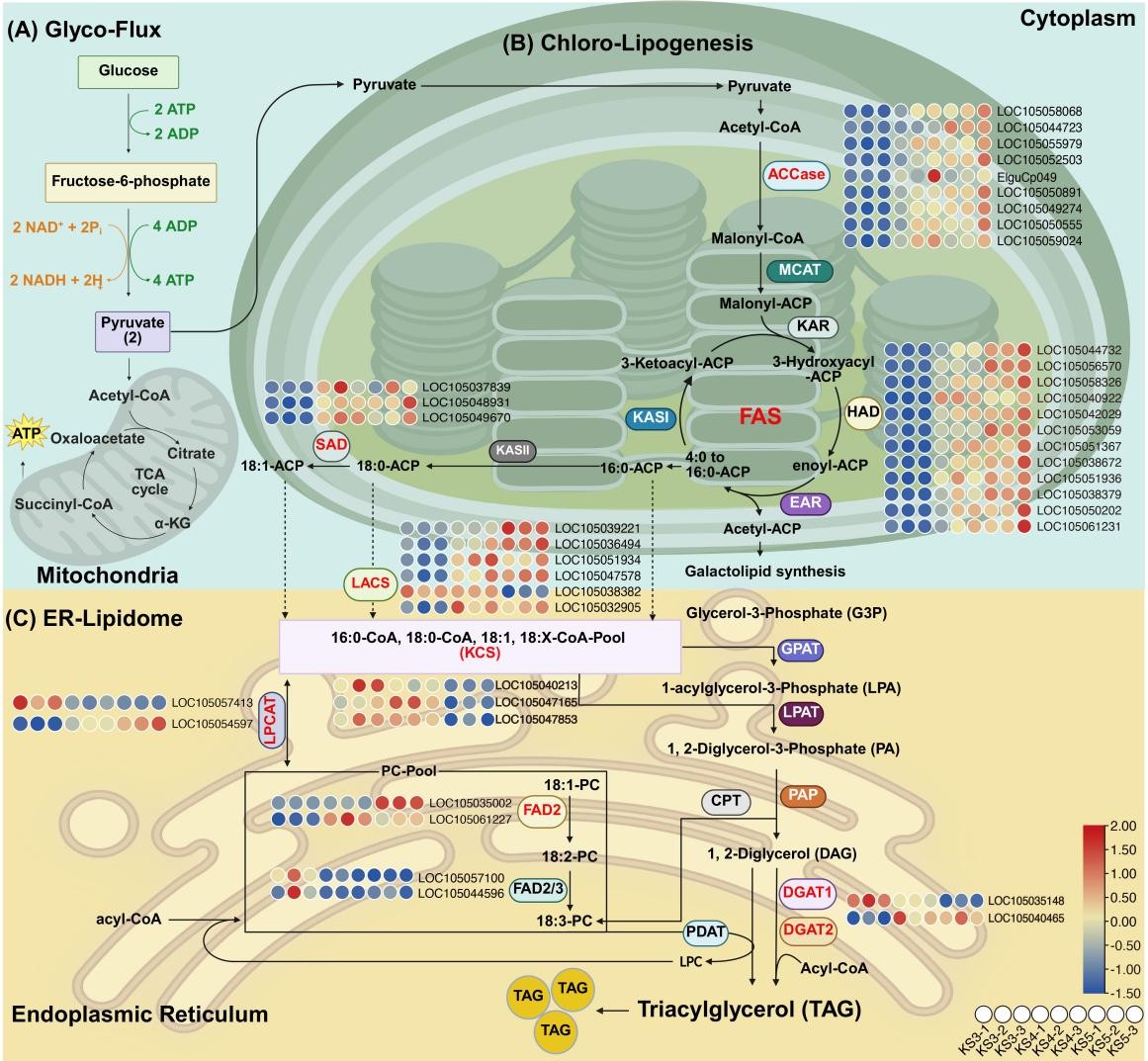
Schematic model of de novo fatty acid synthesis and triacylglycerol biosynthesis in the oil palm fruit.
These research findings were recently published in Food Chemistry under the title “Multi-Omics Insights into Regulatory Control of Lipid Biosynthesis During Oil Palm Fruit Maturation.” Assistant Researcher Huangying Shu and Postdoctoral Fellow Muhammad Imran from the Coconut Research Institute of CATAS are the co-first authors of this paper, with Researcher Xianhai Zeng serving as the corresponding author. This research was financially supported by the scientific research projects of the State Key Laboratory of Tropical Crop Breeding, the Fundamental Research Funds for Central Public Welfare Research Institutes, and the Hainan Provincial Key R&D Program.
Paper Link: https://doi.org/10.1016/j.foodchem.2026.149175