Team Profile:
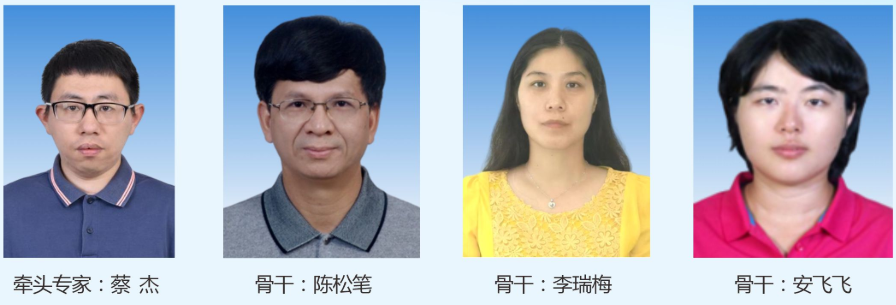
Lead Expert: Cai Jie
Core Members: Chen Songbi, Li Ruimei, An Feifei
The team was newly established in 2023 and currently consists of 18 members, including 3 advisory experts, 7 professors, 11 associate professors, and 15 Ph.D. holders. Over the past five years, significant breakthroughs have been achieved in the exploration of cassava germplasm resources, breeding of new varieties, and elucidation of the mechanisms of postharvest physiological deterioration resistance. The team has undertaken 18 national and provincial/ministerial research projects, including the National Key R&D Program and its sub-projects, the National Modern Agricultural Industry Technology System, and General Programs of the National Natural Science Foundation of China. Ten papers have been published in internationally renowned journals such as The Plant Journal, Postharvest Biology and Technology, and Journal of Experimental Botany, among which 9 are indexed in SCI. The team has published 2 monographs, been granted 5 national invention patents, and received 2 provincial/ministerial awards, including the Hainan Provincial International Science and Technology Cooperation Award.
Research Directions
(1) Elucidation of the Mechanisms of Postharvest Physiological Deterioration in Cassava.
Systematic evaluation of cassava germplasm for storage tolerance and disease resistance, screening for elite germplasm with high resistance to postharvest physiological deterioration (PPD); analysis of PPD from histological, physiological, biochemical, and secondary metabolic perspectives; discovery of key genes involved in PPD; and elucidation of the mechanisms by which cassava root cell apoptosis affects PPD.
(2) Whole-Genome Design Breeding of Hybrid Cassava.
Using genomic, pan-genomic, and resequencing analyses, the team identifies elite resources with low heterozygosity and low deleterious mutation load as starting materials for inbred lines; creates cassava inbred lines with low heterozygosity, storage tolerance, and disease resistance; elucidates the genetic mechanisms of inbreeding depression; and establishes a whole-genome design breeding technology for hybrid cassava.
(3) Creation of New Cassava Varieties with Storage Tolerance and Disease Resistance.
Using induced flowering techniques, the team induces flowering in low-heterozygosity, storage-tolerant, and disease-resistant inbred lines; performs reciprocal crosses to produce F1 hybrid seeds; evaluates F1 seeds for yield, quality, and stability; and selects new varieties with storage tolerance and disease resistance, achieving seed-based propagation.
Achievements and Awards
(1) Construction of a precise phenotypic evaluation model and technology system for cassava germplasm, and discovery of elite germplasm with tolerance to postharvest physiological deterioration (PPD). Using the established model, 13 accessions with no PPD symptoms after 9 days of storage at room temperature were identified. Among them, South China No. 14 and South China No. 102 exhibited PPD tolerance exceeding 15 days (under normal conditions, fresh roots begin to deteriorate within 1-3 days post-harvest). These resources can significantly reduce rot losses during transportation and processing.
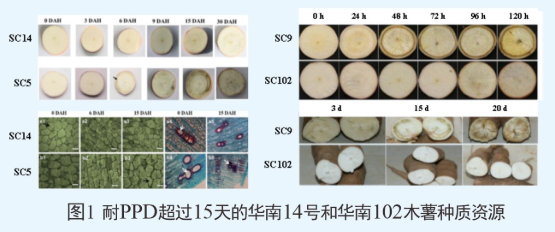
Figure 1: South China No. 14 and South China No. 102 cassava germplasm with PPD tolerance exceeding 15 days
(2) Discovery of early-flowering and easily flowering cassava germplasm, and construction of superior low-heterozygosity self-ing populations. Flowering traits of 1,500 cassava accessions were investigated, and 300 early-flowering and easily flowering accessions were identified, providing excellent parental materials for hybridization and self-ing. Self-pollination was carried out using superior low-heterozygosity germplasm, and the first-generation self-pollinated seeds were harvested 40 days after pollination. Through embryo rescue, over 200 regenerated plants have been obtained to date.
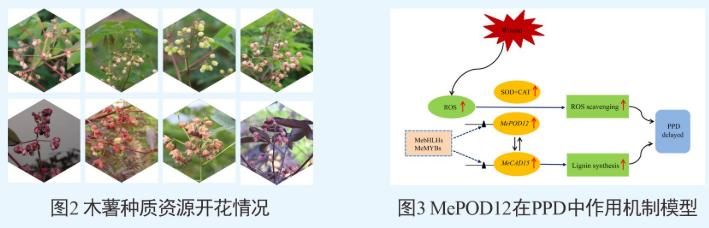
Figure 2: Flowering status of cassava germplasm
Figure 3: Proposed mechanism model of MePOD12 in PPD
(3) Elucidation of the function and mechanism of MePOD12 in postharvest deterioration of cassava roots, providing a theoretical basis and elite gene resources for PPD-tolerant breeding. Focusing on the key ROS-scavenging enzyme MePOD12, the team employed yeast two-hybrid screening, BiFC, luciferase reporter assays, and gene silencing to elucidate its function and mechanism in root PPD. A strong interaction between MePOD12 and MeCAD15 was identified, and a molecular model was proposed in which MePOD12 both scavenges ROS and interacts with MeCAD15 to affect lignin synthesis, thereby delaying PPD. This work was published in Postharvest Biology and Technology (CAS Q1, IF: 7.0).
Team Highlights
Contact Information
Name: Cai Jie
Tel: 15002029095
Email: caijie@catas.cn